
Description
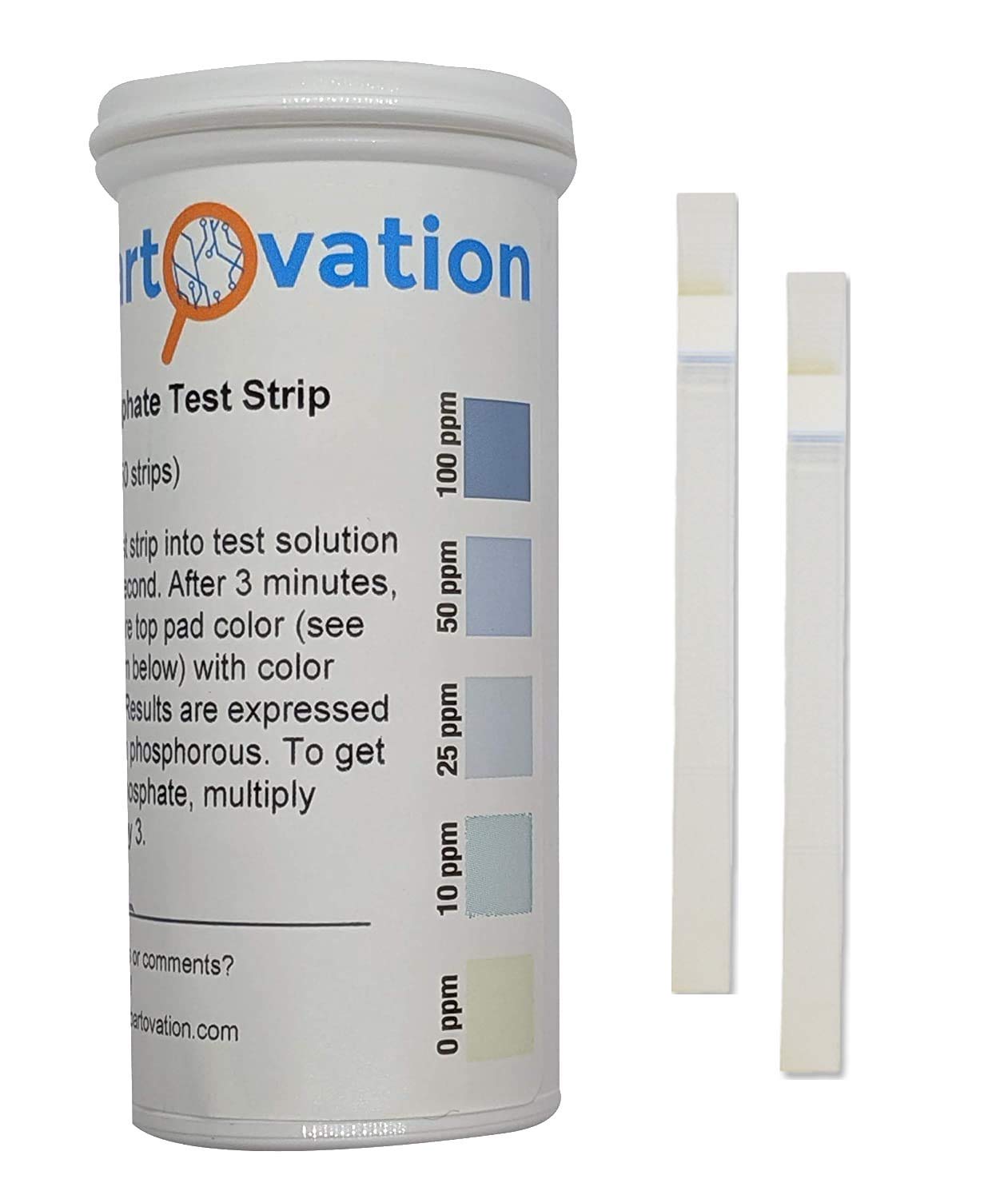
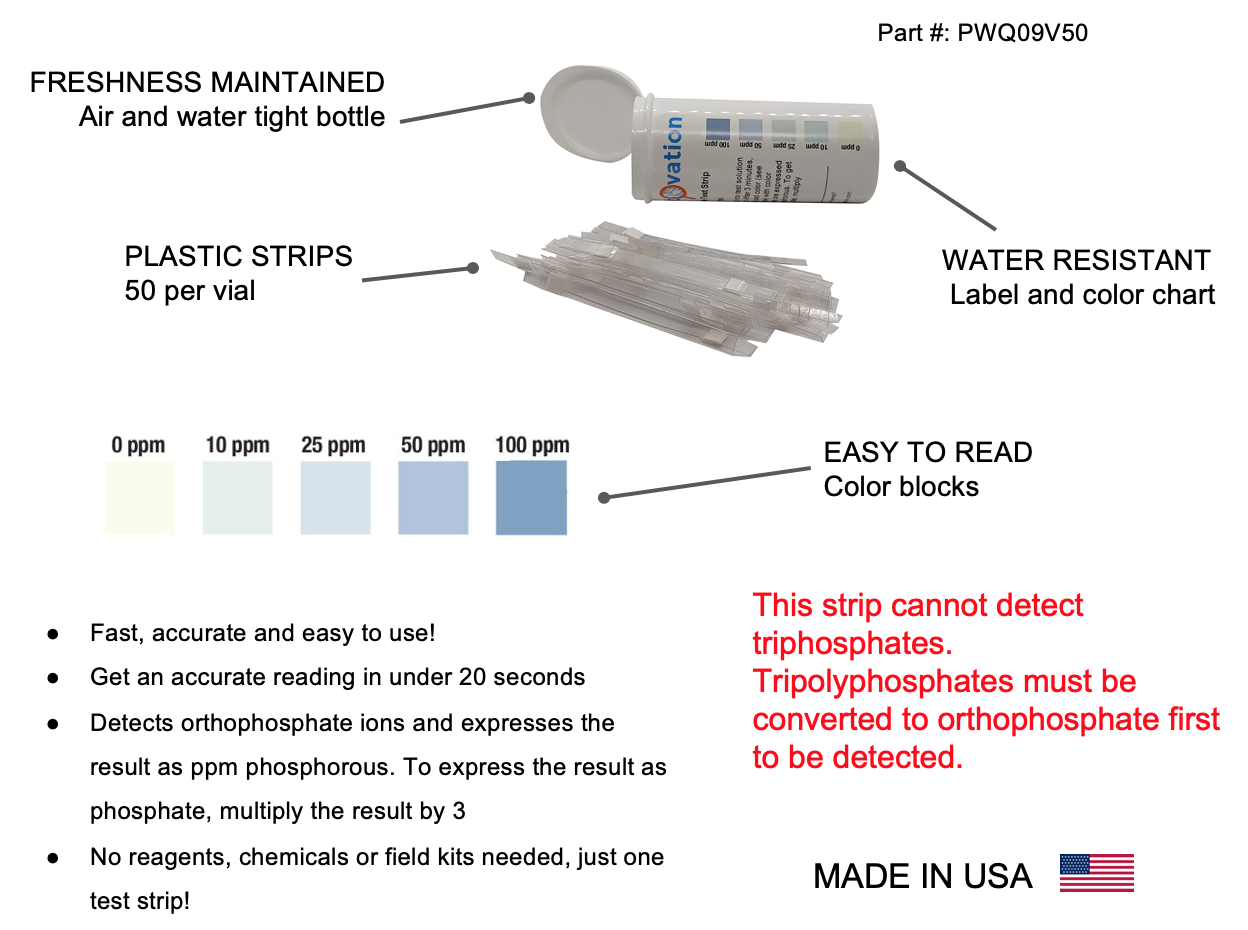
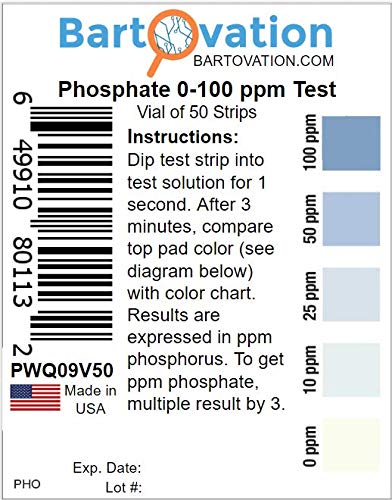
The Phosphate test strip detects orthophosphate ions and expresses the result as ppm phosphorous. To express the result as phosphate, multiply the result by 3. This test strip has a unique construction for more accurate testing. This strip has a sensitivity of 5PPM Phosphorus. You can learn more about measuring the different kinds of phosphorous and its role in the environment.
Instructions:
- Dip the test strip into the solution to be tested for 1 second.
- Remove and compare against the color chart after 3 minutes.
Learn about how this test was utilized to determine phosphate concentrations in a Miller-type experiment to produce novel prebiotic compounds.
![Nitrite 0-25 ppm, Nitrate <span class="bldppm">0-500 ppm</span> Two Pad Test Strip [Vial of 50 Strips]](https://bartovation.com/wp-content/uploads/2020/03/nit-nat-main-300x300.png)
![Total Iron Test Strips for Measuring Water, 0-10 ppm [Vial of 25 Strips]](https://bartovation.com/wp-content/uploads/2025/03/DWQ12V25-main-300x300.jpg)
![Ammonia NH3 Test Strips <span class="bldppm">0-6 ppm</span> for Aquarium, Fish Tank and Pond Monitoring [Vial of 25 Strips]](https://bartovation.com/wp-content/uploads/2020/11/amm-06-main-w-strips-300x300.png)
![Fluoride Test Strips <span class="bldppm">0-100+ ppm READ DESCRIPTION</span> [Vial of 50 Strips]](https://bartovation.com/wp-content/uploads/2021/01/PXL_20210108_170548854-2-1-300x300.png)