Description
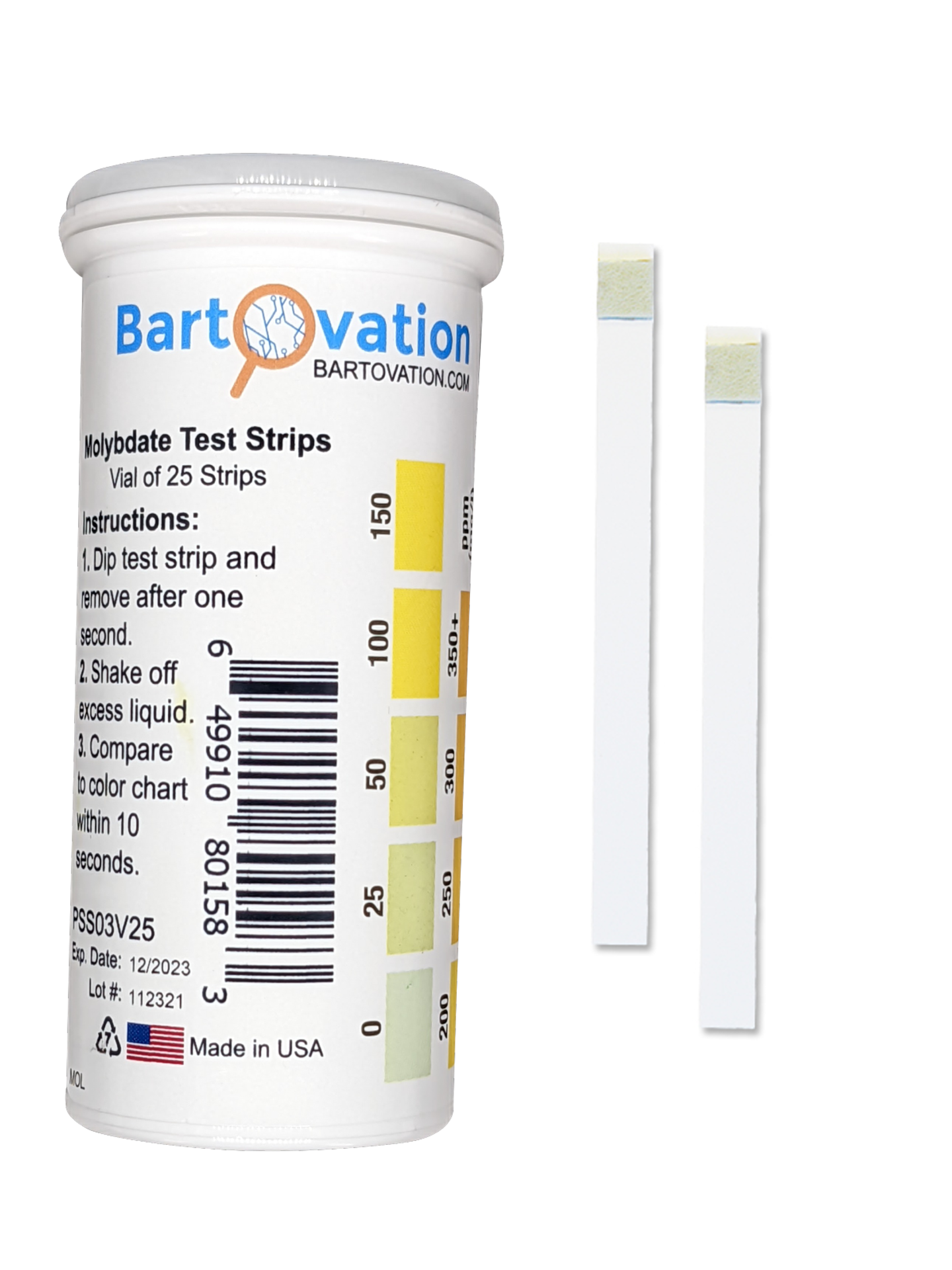
The Molybdate test strip detects molybdate levels from 0-350ppm in increments of 0-25-50-100-150-200-250-300-350ppm. Molybdate is commonly used as a corrosion inhibitor in the water treatment industry. Molybdate is effective in chilled or hot water systems over a wide pH range and is not normally affected by the use of biocides, such as chlorine. When used alone, molybdate levels of 300 ppm or more are needed to effectively inhibit corrosion.
This can be expensive, and therefore most molybdate-based inhibitors include other ingredients that enhance the overall inhibition properties and reduce the amount of molybdate needed. This test strip can provide an economical means to monitor ppm levels. Consult with the manufacturer of the treatment chemical being used for details on the concentration of molybdate to be maintained.
How to test Molybdate:
- Dip the Molybdate test strip into the solution for 1 second.
- Shake off excess liquid and compare to color chart within 10 seconds.
Frequently Asked Questions (FAQ)
What is the difference between ppm as Mo and ppm as MoO₄?
Our strips measure and provide results in terms of MoO4 (-2). To express the measurement as Mo (+6) simple molecular weight conversion is required. You must divide by 1.67 or multiply by 0.6 (1/1.67)
How does a test strip compare to a drop test for molybdate?
A test strip is a fast screening check: dip for 1 second and compare the color within 10 seconds. A drop test is a titration: you add reagent drop by drop and count until the color changes. The strip is faster and simpler; the drop test takes several minutes to administer but can give you more precision and can be used as a secondary test method to confirm the results.
What equipment do I need?
The strip needs no equipment, reagents to measure, or pipettes. This test is packaged in a moisture wicking bottle to ensure a long shelf life and the color chart is on the bottle.
What is molybdate, and why is it used in closed-loop systems?
Molybdate is a corrosion inhibitor. In the presence of oxygen it helps form a protective film on steel, which reduces general corrosion and pitting in closed-loop boiler and heating systems.
What molybdate level should I maintain?
There is no single target. It depends on your inhibitor formulation, whether molybdate is used alone or blended, the metals in your system, and pH. Always follow your chemical supplier or system manufacturer’s target for your system.
How do I test molybdate in a closed-loop boiler system?
Take a representative sample, dip the strip for 1 second, shake off excess liquid, and compare the pad to the colour chart within 10 seconds. Record the result, the date, and the system it came from.
How often should I test?
Weekly testing is typical for closed systems, with a fuller lab or titration check monthly. Your chemical supplier’s program sets the frequency for your site. After detection of a leak, top-up, or chemical addition more frequent testing is recommended to make sure your system is back in balance.
How should I store the strips?
Store them cool, dry, and out of direct sunlight, at room temperature, with the bottle closed securely. These strips are packaged in a moisture wicking bottles to help protect them from humidity.
How long do they last?
The strip has a 3-year shelf life from manufacture when stored properly. Drop-test liquid reagents often expire in under 6 months, so a kit can expire between visits at a low-frequency site. It is best practice to check the expiry date of any test kits before use to make sure you get the best result possible.